Why Cable Size Matters
A cable that's too small for the load it carries overheats. The insulation degrades faster, the voltage dropping along the run gets worse the further it travels, and in the worst case the cable becomes a fire risk long before the breaker ever trips. Oversizing wastes money on copper you don't need. The goal is matching the conductor to the actual circuit load — not guessing.
The chart below is a general-purpose starting point for the circuits most Nigerian homes and small commercial buildings actually have. It assumes a reasonably short cable run (under about 25 metres) at normal ambient temperature.
Quick Reference: Cable Size by Circuit Type
| Circuit / Appliance | Recommended Size | Cable Type | Typical Breaker |
|---|---|---|---|
| Lighting points & ceiling fans | 1.5mm² | Single-Core PVC (in conduit) | 6A |
| 13A sockets & ring mains | 2.5mm² | Flat Twin & Earth | 20A |
| Split-unit air conditioners (1–2HP) | 4.0mm² | Flat Twin & Earth | 32A |
| Water heaters / instant showers | 4.0mm²–6.0mm² | Flat Twin & Earth | 32A–40A |
| Electric cookers | 6.0mm² | Flat Twin & Earth | 40A |
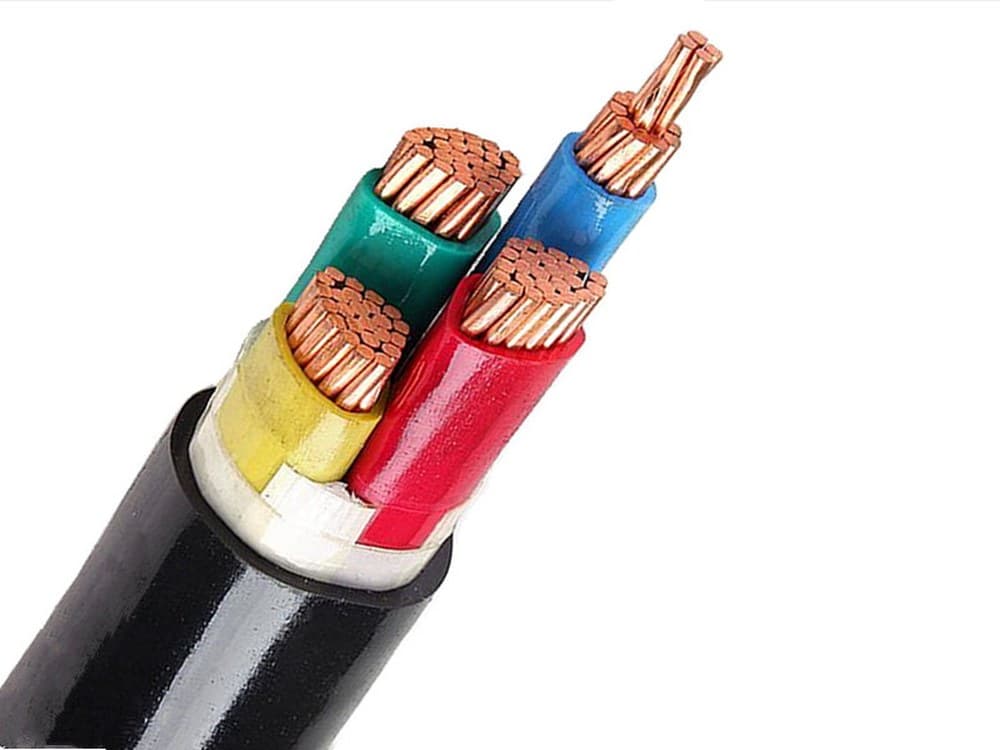
| Sub-main feed (meter to DB) | 10mm² | Armoured SWA | 63A |
| Generator changeover feed | 16mm² | Armoured SWA | 63A |
A Note on Cable Run Length
The chart above assumes a short run. The longer the cable has to travel from the distribution board to the appliance, the more voltage it loses along the way — this is voltage drop, and it gets worse with distance and with higher current. For runs beyond about 25 metres (a detached boys' quarters, an outbuilding, a long generator feed trench), size up one step from what the table shows, even if the load itself hasn't changed.
Trade note: This chart is a general planning reference, not a substitute for a proper load calculation. Always have your final circuit sizing checked by a qualified electrician before wiring a building.